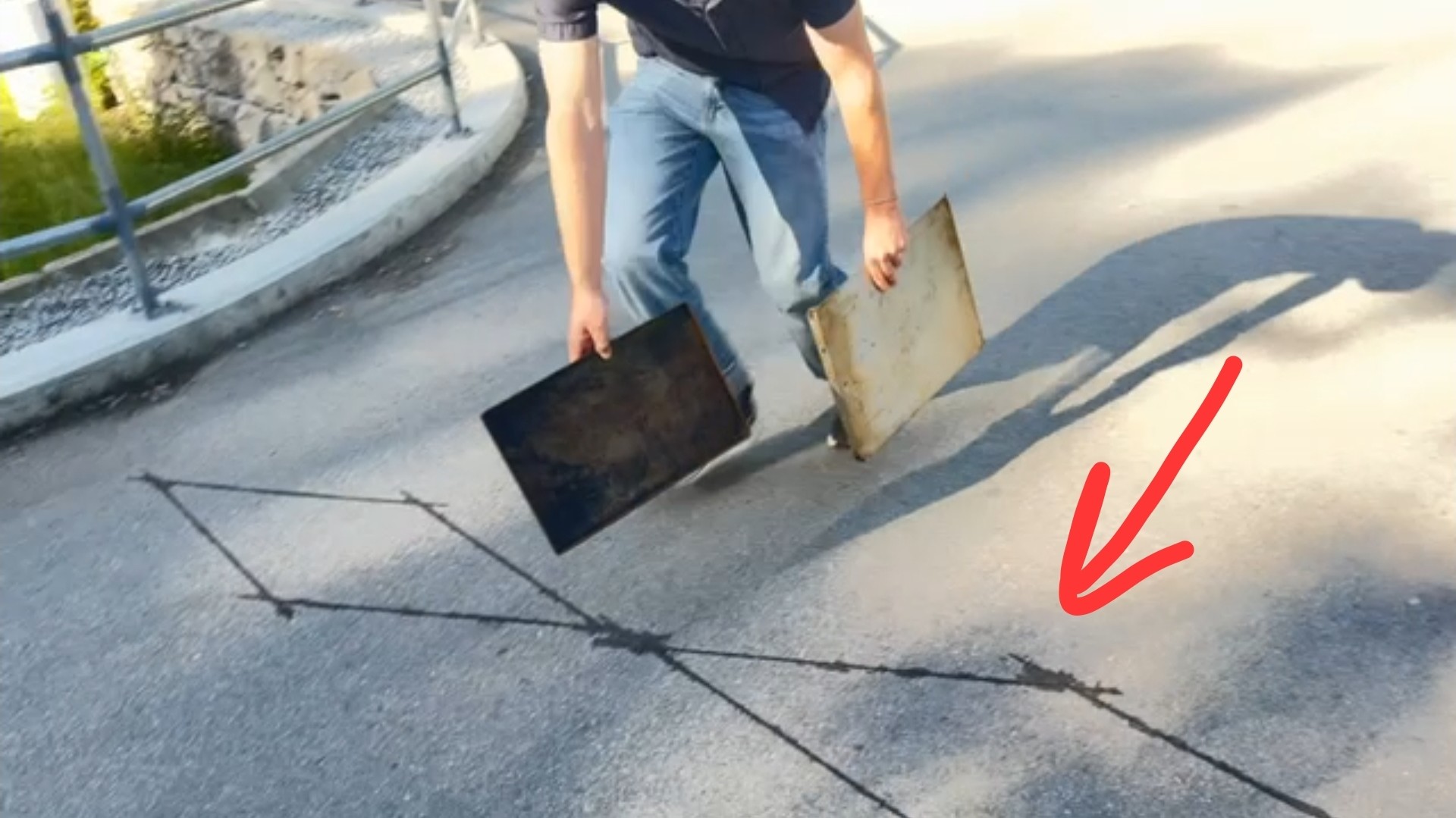
Sometimes if you’re biking or walking around certain cities you’ll see markings on the ground that look like diamonds or boxes. After I first noticed these a few years back, I found out that these are actually induction loops that have been embedded in the pavement to detect the passing of bicycles. Different variants will use different shapes and sizes (these diamond ones I’ve come across seem to be ‘ZELT’ loops by the company Eco-counter), and the technology can be used to classify vehicle types (cars, bikes, scooters, etc.). They’re most commonly used for traffic and drive-thrus.
I’ve had a question in my head for a while now: “What is the least bike-like thing I can get to count as a bike?” To figure this out I’ve first got to understand how they work + find a counter with a live display.
1. HOW DO THEY WORK?
The conductive loop has an alternating current sent through it, which generates a magnetic field. When you pass a conductor (like a bike wheel rim) over the changing field, eddy currents are induced in the object. Those currents create their own magnetic field that opposes the change in the loop’s field. This opposition changes the loop’s effective inductance, which is a measurable signal.
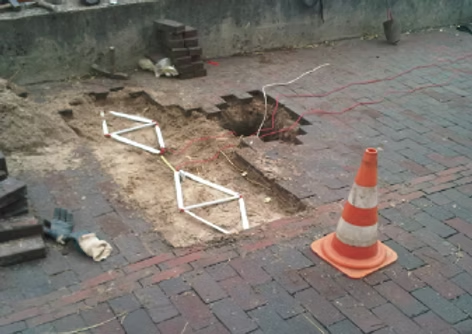
source: https://www.klkkus.com/zelt
Depending on the signature of inductance change over time that occurs, the system can classify what type of object likely passed over the loop. For a bicycle for instance, you have two metal wheels passing over the area closest to the loop at a somewhat predictable distance apart.
Eco-counter’s website says that their proprietary algorithm ‘SIRIUS’ uses 13 differentiating features. A patent of theirs from 2017 describes the general induction loop system but doesn’t talk much about classification details.
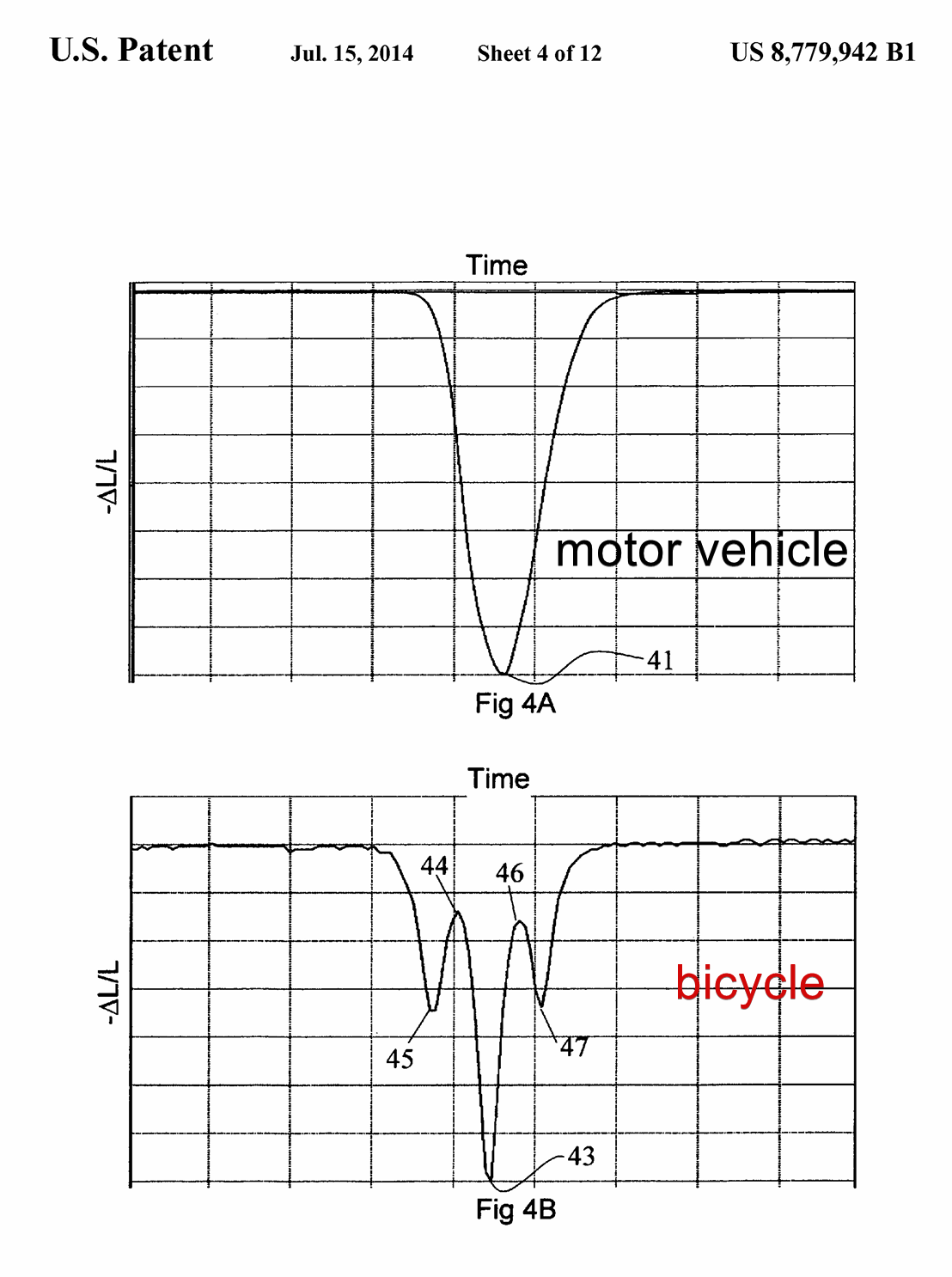
Another patent, US8779942B1, gives an example of how this might actually look. The loop geometry described in this patent is different, which changes the expected signature, but the core concept stays the same.
US8779942B1
“The signatures shown in FIGS. 4A and 4B were obtained using a parallelogram loop having the following geometry. The two shorter sides of the parallelogram loop are each forty-two inches long and each shorter side was located on the 10 respectively adjacent lane line. The parallelogram long loop sides were arranged at a forty-five degree angle with respect to the direction of travel along the lane. The spacing between the long loop sides matches the spacing between the front and rear wheels of a standard bicycle.”
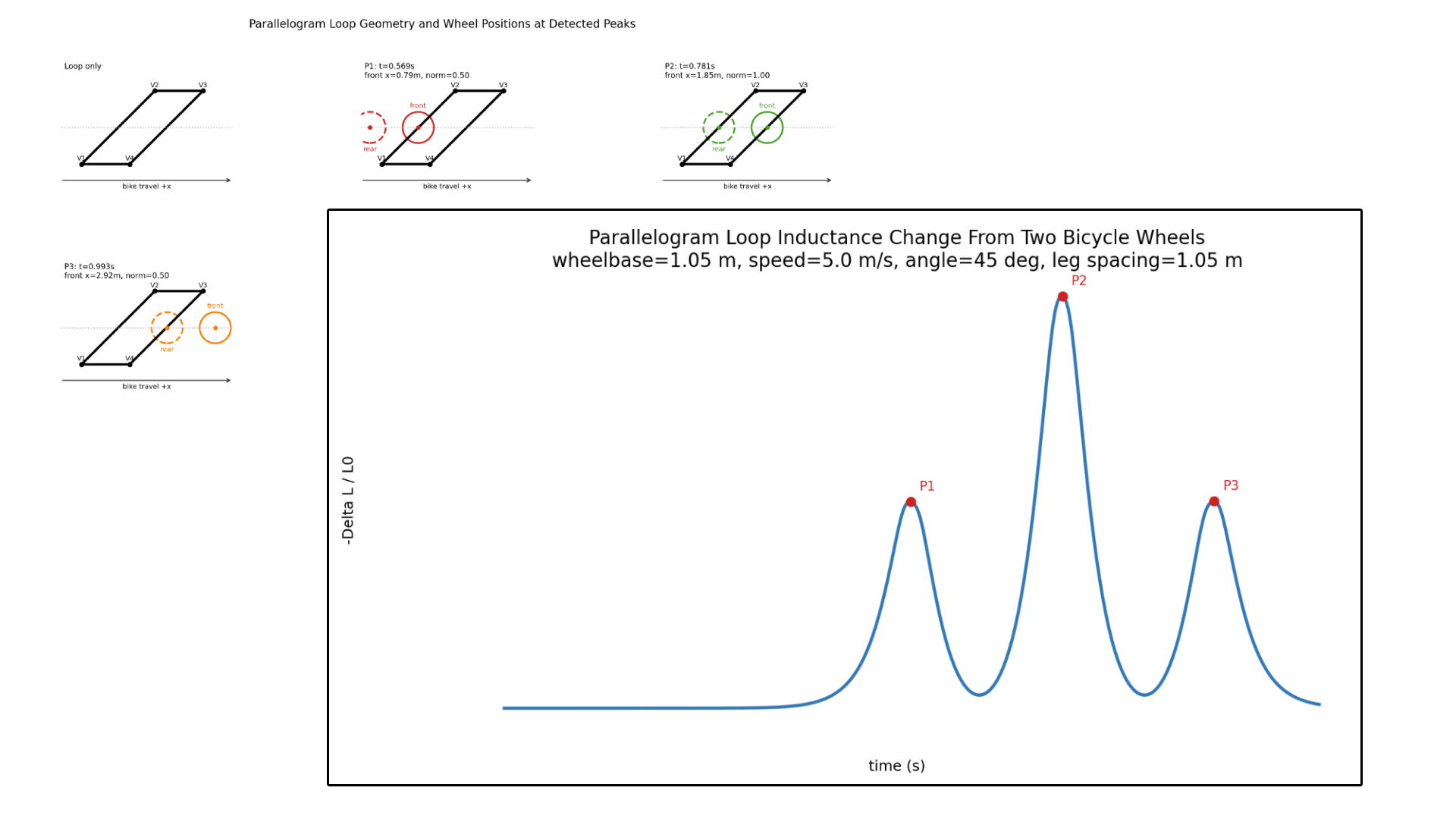
Since the loop is set up such that it matches the bicycle’s wheelbase, the big spike/dip at (43) occurs when the front wheel and back wheel hit each end of the loop at the same time.
I made a couple simplistic simulations to see how the geometry/width of the loop impacts what the signature looks like.
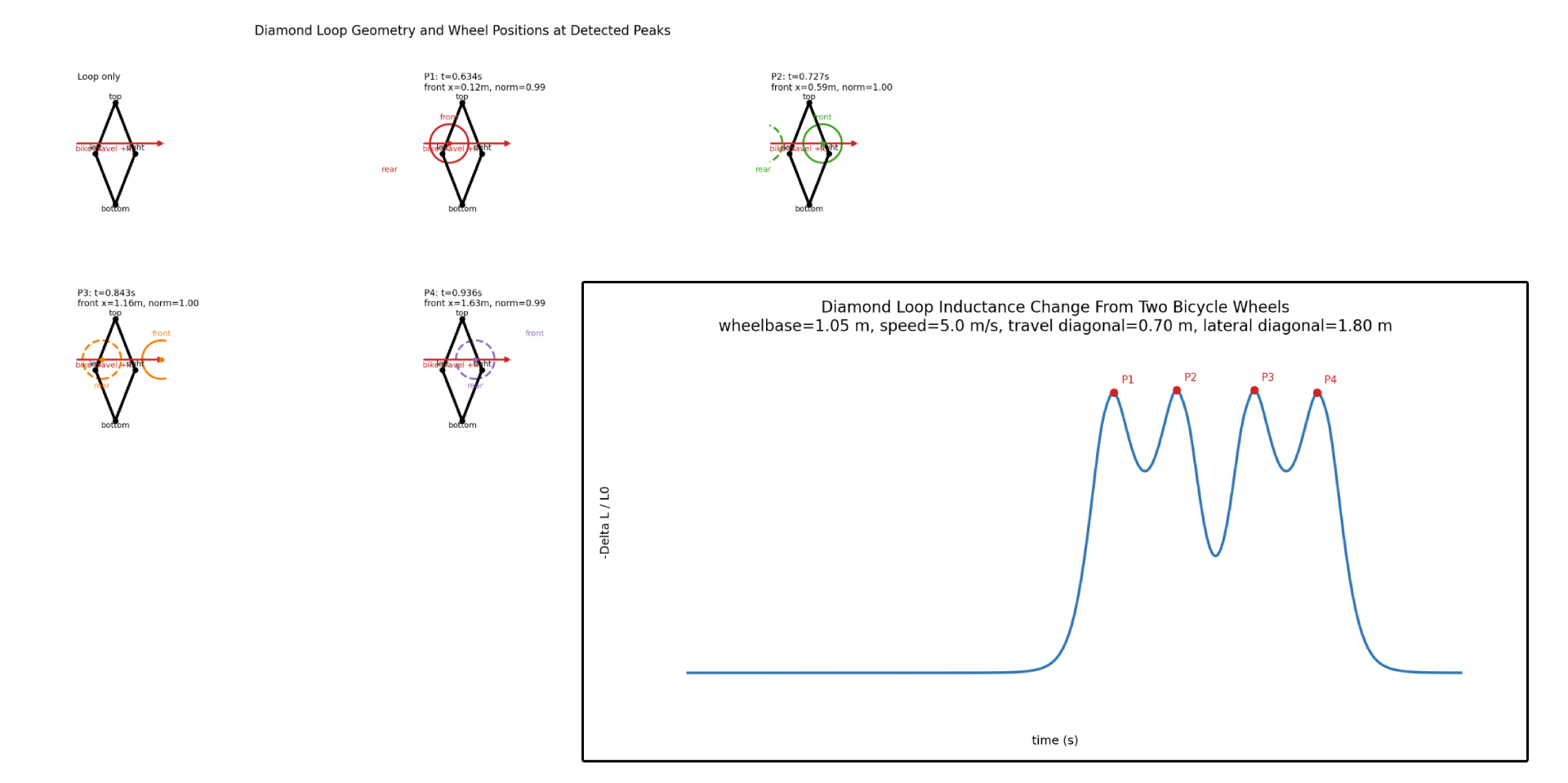
To trick the bike counter we need to find a way to produce something close enough to the expected signature of a bike. Since the two wheels appear to be what produce the main changes, I’m focusing on how to recreate those. The main factors I can think of are:
- Material Properties / Conductivity
- Geometry
- Distance and orientation to loop / ground
- Distance between ‘wheels’
- Speed
I am quite curious as to just how precise the signature can get (if you know the geometry of a specific bike, can it be tracked by looking for a signature?), but maybe that’s a different post.
2. WHERE IS THE COUNT?
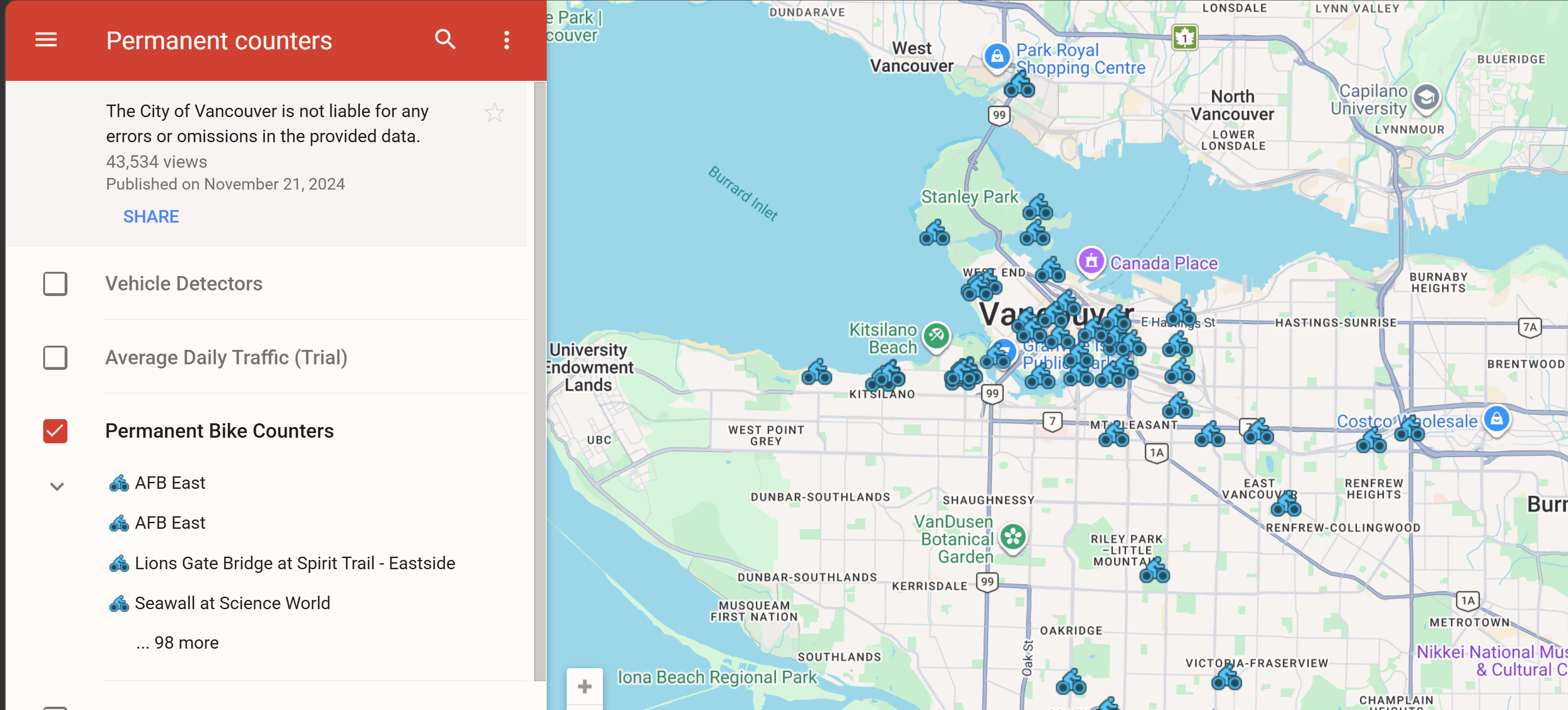
Even if I can mimic the signature perfectly, I won’t know if I’ve done it unless I can see a live update of the bicycle count. I’ve seen these before at certain locations around Montreal, Seattle, Waterloo, Kitchener, Winnipeg, and Vancouver (where I currently am). Unfortunately the two locations I was already aware of in Vancouver aren’t accessible right now. The most well-known one is next to Burrard Street Bridge, but the display has been covered up since 2024. There’s also one at Science World, but it’s been broken every time I’ve checked while passing by. The city has a map of where bike counters are installed around the city, but after scouring Google Street View for a while I couldn’t find any counter displays.
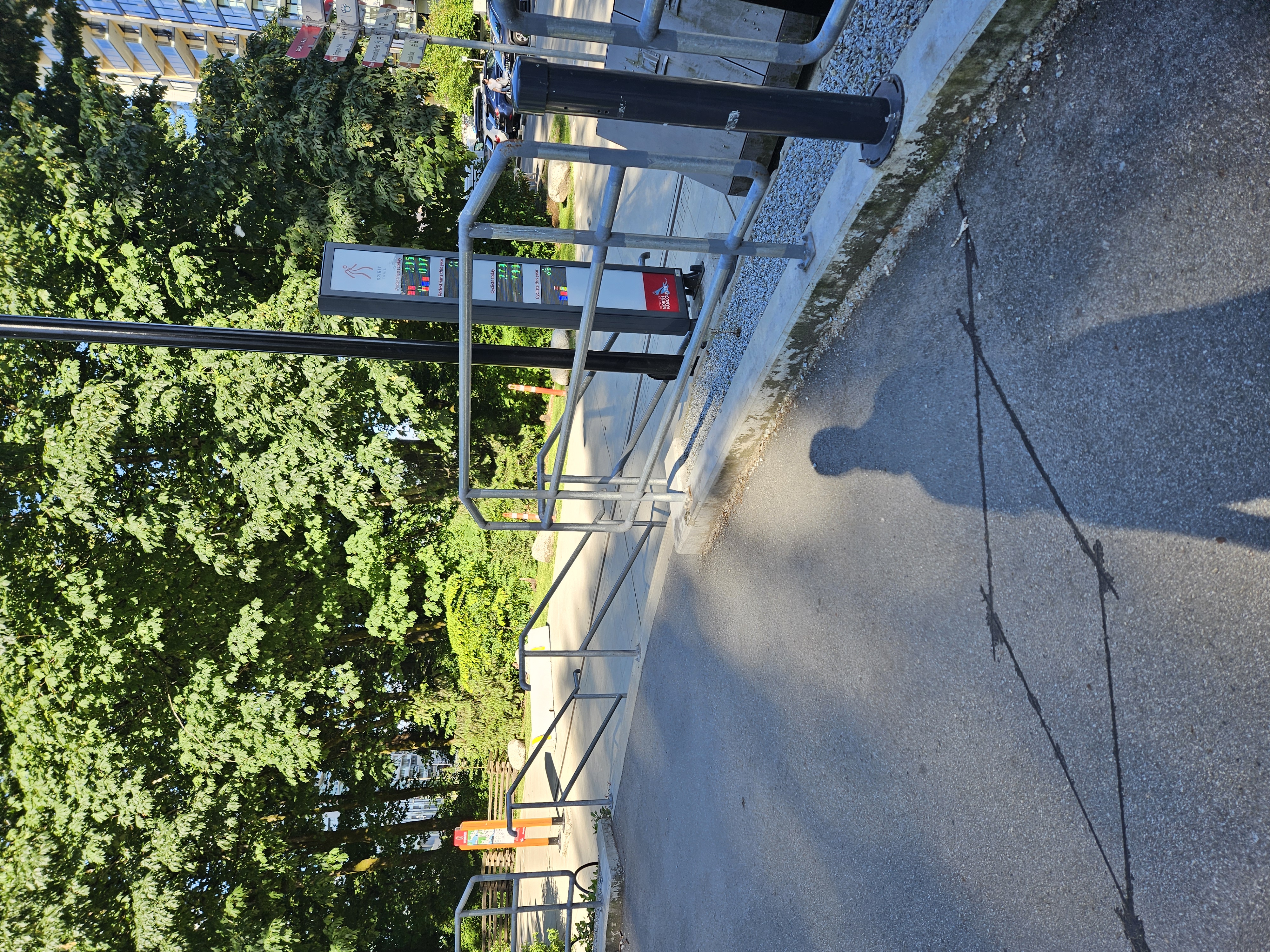
Ultimately I found a Facebook post mentioning a bike counter in North Vancouver. I went to check it out and confirmed that it was functional.
I also brought a few aluminum pans with me in the hopes that it might be that simple… it did not work and I’m sure I looked insane running back and forth across the counter holding pans near the ground.
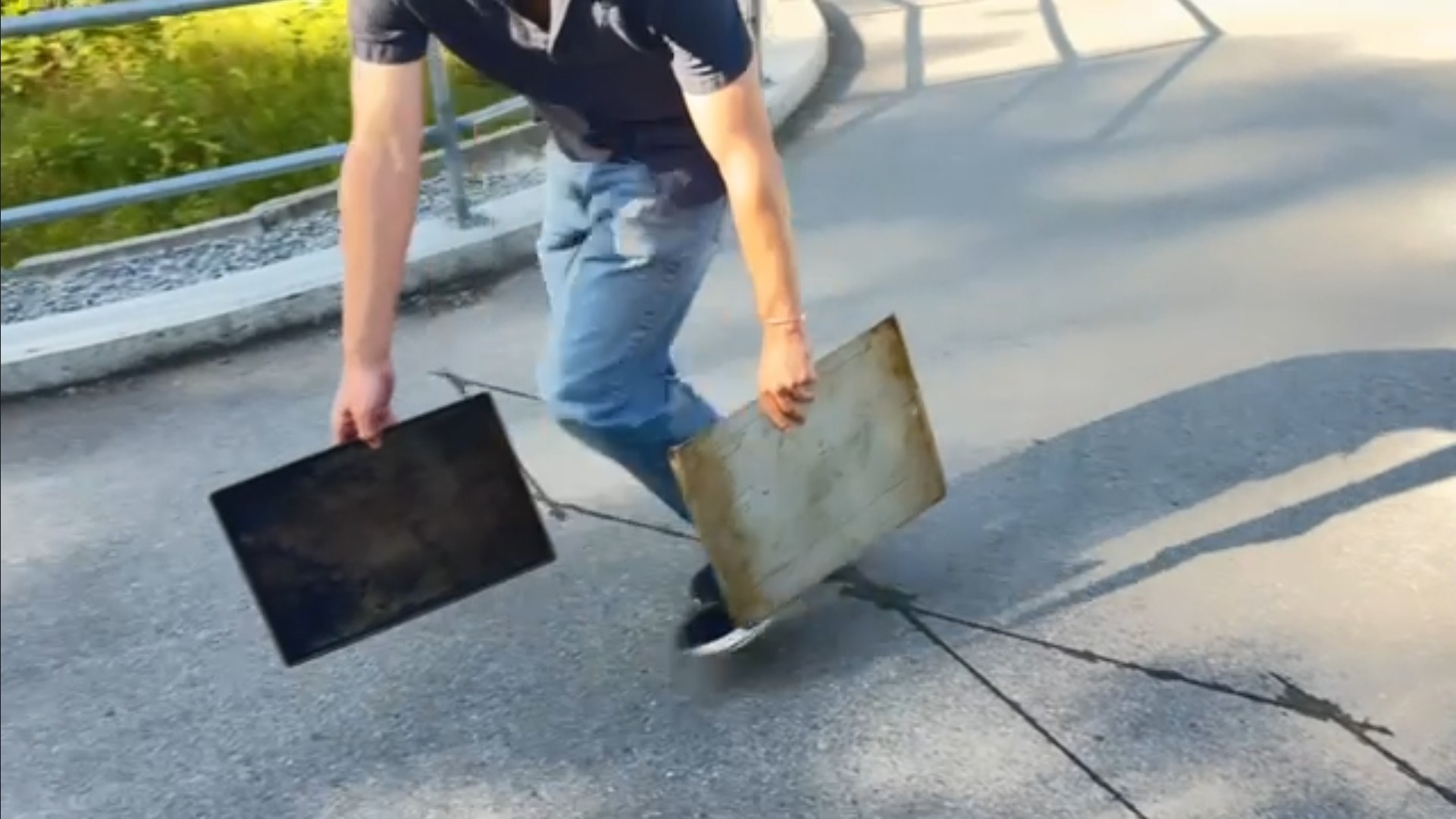
So a couple conductive objects of similar size to wheels isn’t enough, at least not in the form factor I tried.
As for next steps, I’m currently trying to procure a cheap old bike from Facebook Marketplace so I can take it apart piece by piece until the counter stops working, then build up from there.
Results and hopefully a working solution will be in PART 2.